BDRs and SDRs sound similar, but they handle very different parts of your pipeline.
One focuses on inbound leads.
The other creates outbound opportunities.
Before you choose which role your team needs in 2026, you should know how they differ and which one actually fits your current sales motion.
In this guide, we’ll break down the key points you need to look at before deciding, what each role does, where each role works best, and how AI is changing both.
Let’s get into it.
BDR vs SDR: Quick Comparison
Category | SDR | BDR |
Lead Source | Inbound leads (already interested) | Outbound leads (no prior interest) |
Who They Contact | People who know the company | People who may not know the company |
Main Goal | Qualify leads | Create new interest |
Core Tasks | Follow-up, qualification, routing | Research, cold outreach, first-touch conversations |
Metrics | Speed, qualification quality, AE acceptance | Meetings booked, opps opened, pipeline created |
Funnel Impact | Middle of funnel | Top of funnel |
What is an SDR?
An SDR (Sales Development Representative) handles inbound leads, people who already shown interest in your product by filling out a form, booking a demo, downloading a resource, or signing up for a webinar.
Their main job is to qualify these leads.
That means checking if the lead is a good fit, has buying intent, and is ready to speak with a salesperson (usually an AE).
They do not close deals. Instead, they ensure only serious, sales-ready leads are passed to the sales team.
Here’s what an SDR does:
Checks for new inbound leads
Responds quickly via email, call, or message
Asks basic questions to see if the lead fits the ICP (ideal customer profile)
Updates the CRM with notes and lead status
Sends good leads to AEs for next steps
Stays in touch with warm leads who aren’t ready yet
SDRs help your team save time by making sure AEs only talk to people who are likely to buy.
They work best when there is steady inbound lead flow coming from marketing.
What is a BDR?
A BDR (Business Development Representative) focuses on outbound work.
This means reaching out to people who have not shown interest yet.
BDRs find new accounts, new contacts, and create new conversations from scratch.
Their main job is to start interest, not wait for it.
They look for the right companies, send cold emails, make calls, and open doors that marketing or inbound leads haven’t reached.
BDRs also do not close deals.
Their goal is to create early interest and pass potential opportunities to the sales team once someone shows real intent.
Here’s what a BDR does:
Finds and researches new target accounts
Builds outbound lists and outreach sequences
Sends cold emails and makes cold calls
Personalizes messages for each industry or role
Starts first conversations and checks basic fit
Sends early-stage interest to AEs for next steps
BDRs help your team grow by creating new pipeline that wouldn’t exist without outbound effort.
They work best when your business needs more meetings, more reach, or wants to break into new markets.
BDR vs SDR: 5 Key Differences
BDRs and SDRs both help create pipeline, but they do it in completely different ways.
Here are the five differences that matter most in 2026.
These differences shape how teams hire, train, measure performance, and build their sales process.
1. BDR vs SDR: How Each Role Gets Leads?
SDRs handle inbound leads, people who already reached out through a form, demo request, or content.
They start work after interest is shown.
BDRs create outbound leads by reaching out to people who have shown no interest yet.
They start work before any buying signal appears.
This is the foundation of both roles.
2. BDR vs SDR: Type of Buyers They Speak To
SDRs talk to buyers who already know the brand and want more information.
These conversations are usually warmer and more direct.
BDRs talk to buyers who may not know the company at all.
These conversations require more context, patience, and clear messaging.
The tone, timing, and style of outreach are very different.
3. BDR vs SDR: Goal of Their Daily Work
SDRs aim to qualify leads quickly and pass only strong ones to AEs.
They focus on fit, timing, and need.
BDRs aim to create new interest by starting conversations with the right accounts.
They focus on research, targeting, and first-touch outreach.
One improves existing demand.
The other builds new demand.
4. BDR vs SDR: How Their Success Is Measured
SDR success is based on the speed of follow-up, the quality of qualification, or the AE acceptance rate of meetings.
Whereas, BDR success is based on meetings booked from cold outreach, new opportunities opened, and pipeline value added.
The metrics reflect the motion each role supports.
5. BDR vs SDR: Where Each Role Impacts the Sales Funnel?
SDRs work in the middle of the funnel, organizing and improving inbound leads.
They make sure AEs talk to the right people.
BDRs work at the top of the funnel, finding new accounts and bringing them into the pipeline.
They expand reach and open new opportunities.
Both are important, but each one affects a different part of the engine.
BDR vs SDR: Which One Is Better?
The better role is the one that solves your current pipeline problem.
Here’s how to choose whether you need an SDR or a BDR:
Situation | Who You Need | Why |
Inbound leads are piling up with slow or no follow-up | SDR | SDRs qualify inbound leads fast, clean up lead flow, and send only real buyers to AEs. |
Outbound meetings are low and pipeline is thin | BDR | BDRs create new conversations with accounts that would never come inbound. |
You sell to large companies (Director, VP, C-suite) | BDR | Enterprise buyers rarely fill forms; outbound is required to reach them. |
Inbound leads are good but not converting into meetings | SDR | SDRs fix poor qualification, slow follow-up, and messy CRM notes. |
You want both volume and high-quality leads | Both SDR + BDR | SDRs protect inbound; BDRs expand outbound. Together, they keep pipeline steady and predictable. |
Each role is useful for a different situation, so the right choice depends on what your sales team is struggling with right now.
AI SDR and AI BDR: The New Version of These Roles
As AI takes over the early steps of sales, SDR and BDR roles are shifting.
Teams now use AI SDRs for inbound and AI BDRs for outbound, while reps focus on real conversations.
An AI SDR supports inbound by checking fit, sorting leads, and sending quick, relevant messages the moment someone shows interest.
An AI BDR supports outbound by monitoring your target market and spotting accounts that show buying signals, such as new hires, new tools, or new projects.
This shift is happening because AI can track more accounts and react faster than a human team.
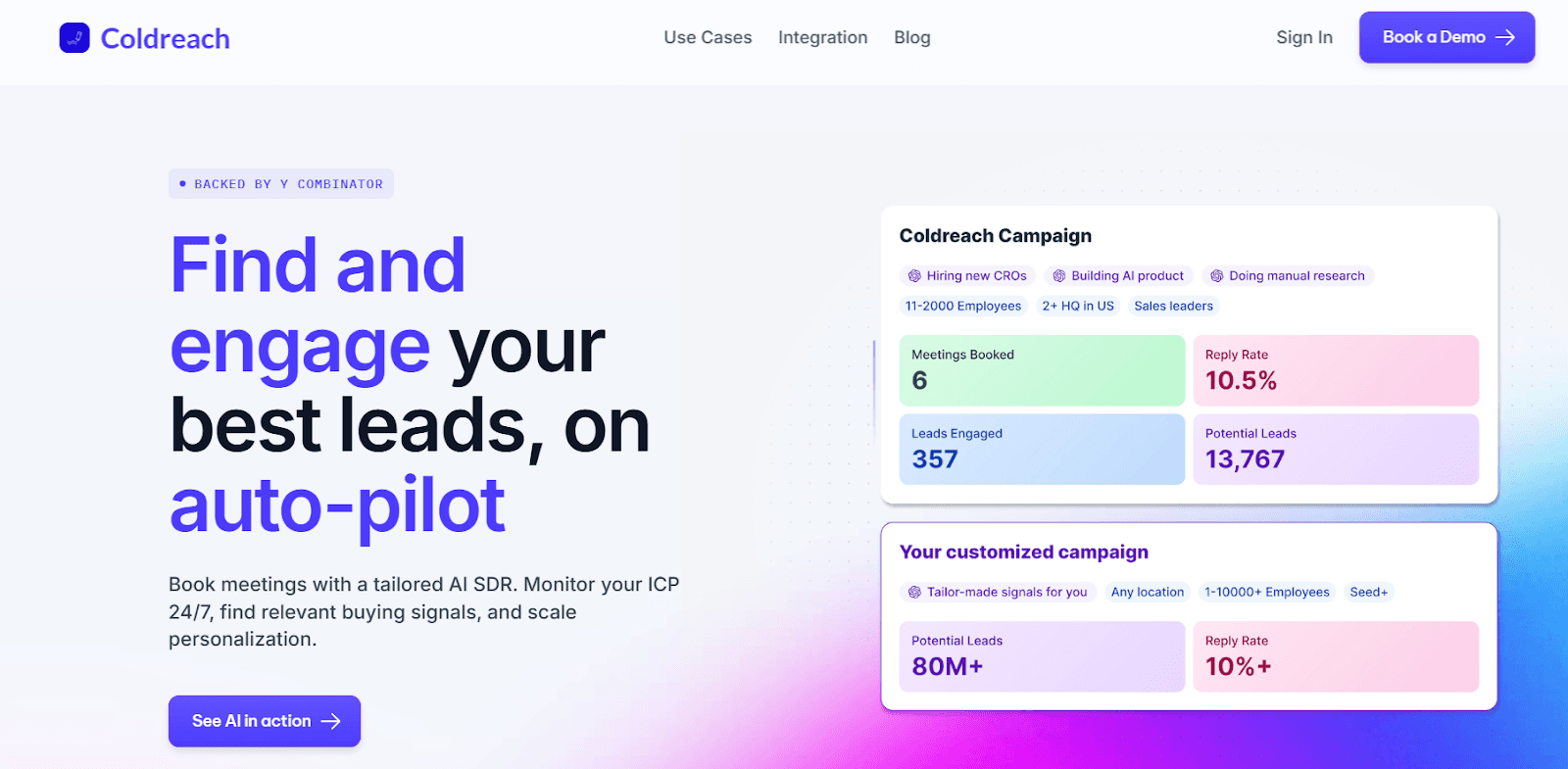
Coldreach is an AI SDR/BDR platform that uses real buying signals to find the right accounts and handle the first steps of outreach.
It gives you a complete AI-driven motion that works from actual signals you choose.
Here’s what it actually does:
Coldreach monitors your ICP 24/7 and alerts you when an account matches the signals you care about.
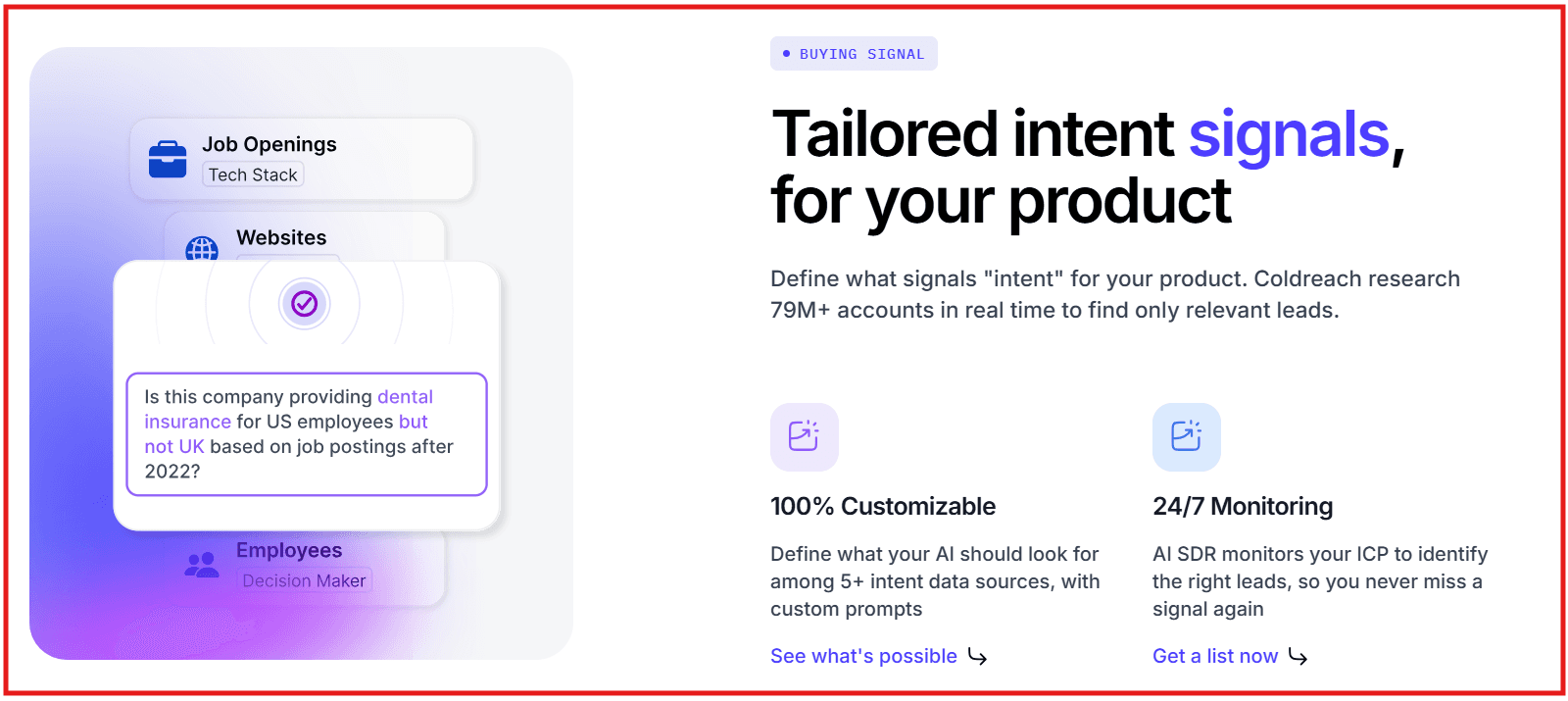
It lets you define custom buying signals, job postings, news updates, website changes, tech stack shifts, and more.
Every email is personalized based on the exact signal Coldreach found, such as new hires, new tools, or new projects.
It builds targeted lead lists in minutes by scanning multiple public data sources and vetting each account.
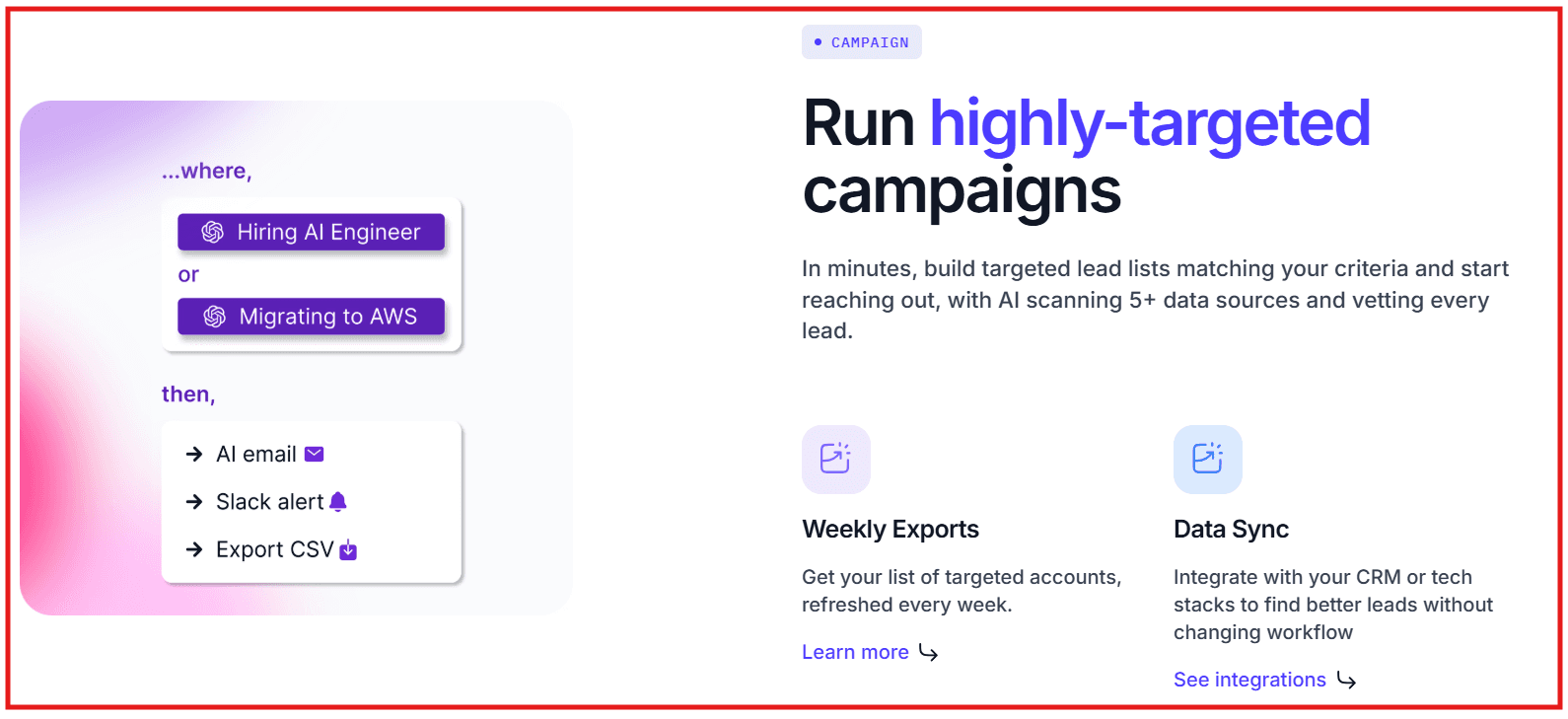
Your high-intent account list is refreshed weekly so your team always works with updated data.
Coldreach can send outreach automatically the moment a new buying signal appears.
In simple words, Coldreach finds the right accounts, shows you the exact reason to reach out, writes the message for you, and reaches out automatically, based on the real signals you choose.
Conclusion
SDRs and BDRs both help your sales team, but they each solve different problems.
As AI becomes a bigger part of sales, these roles are getting easier, faster, and more focused.
Instead of spending hours on busywork, reps can now spend their time talking to people who are actually interested.
If you want help finding the right leads and reaching out at the right time, Coldreach can do this for you.
It watches your market, spots real buying signals, and sends personalized messages automatically, so your team can work smarter, not harder.
Related Posts
Frequently Asked Questions
What is the difference between a BDR and an SDR?
A BDR usually focuses on outbound prospecting and pipeline creation, while an SDR may handle inbound qualification, outbound outreach, or both depending on the company. In practice, the titles overlap, but the goal is the same: create qualified sales conversations.
Can AI replace BDRs or SDRs?
AI can automate large parts of the research, list building, email writing, and follow-up workflow. It does not replace human judgment in discovery, negotiation, or relationship building. The strongest teams use AI SDRs to create more qualified conversations for human sellers.
How does Coldreach support BDR and SDR teams?
Coldreach acts like an AI SDR for the repetitive top-of-funnel work. It monitors 113M+ accounts and 550M+ contacts, finds buying signals, researches each lead, writes personalized outreach, and helps teams book more meetings without adding headcount.